


 Download our Start-up Guide
How to Start a Corporate or Commercial Law Firm in England and Wales
Starting your own corporate or commercial law firm can be an opportunity to build a practice around your expertise, develop direct relationships with business clients and take greater control of your professional future.
However, establishing a successful firm involves more than being an experienced solicitor. You will need to plan your services, choose an appropriate business structure, understand the regulatory requirements, arrange professional indemnity insurance (PII), establish your business infrastructure and develop a strategy for winning clients.
If you are considering setting up a corporate or commercial law practice in England and Wales, this guide explains the key areas to consider and how to approach the process.
At Intellistart, we help solicitors prepare to launch their own practices, working alongside specialist regulatory compliance consultants and insurance brokers. We can also help with the practical business setup and marketing needed to establish your new firm.
1. Define your corporate and commercial law services
Before setting up your firm, decide which services you intend to offer and which types of clients you want to serve.
Corporate and commercial law covers a broad range of legal work so as a new law practice, you may choose to specialise in one area or offer several related services.
For example, your practice might focus on:
- Company formation and corporate structuring: Advising business owners on company structures, ownership and governance.
- Mergers and acquisitions: Supporting buyers and sellers through business acquisitions, disposals and due diligence.
- Commercial contracts: Drafting, reviewing and negotiating contracts with customers, suppliers and other businesses.
- Shareholder agreements: Helping business owners establish clear arrangements for ownership, decision-making and resolving disputes.
- Corporate restructuring: Advising businesses on reorganisations and changes to their corporate structure.
- Commercial legal advice: Providing ongoing legal support to businesses as they grow and encounter new challenges.
- Business sales and investments: Advising on transactions, investment arrangements and related documentation.
You do not necessarily need to offer every service from the outset. A focused practice can make it easier to communicate your expertise, identify your ideal clients and build a recognisable position in the market.
Consider whether you want to work with start-ups, owner-managed businesses, established companies, investors or other professional firms. Each audience may have different expectations, budgets and reasons for seeking legal advice.
Your chosen specialism will influence your business plan, pricing, staffing, insurance discussions and marketing strategy.
2. Research your market and identify your target clients
A clear understanding of your market can help you avoid launching a firm without a realistic plan for generating work.
Start by researching the businesses you intend to serve. Consider their size, location, industry, likely legal requirements and how they currently find legal advisers.
For example, a corporate solicitor targeting owner-managed businesses may need a different approach from a firm specialising in mergers and acquisitions for larger organisations. Your research should consider:
- Demand: Which businesses need the services you intend to provide, and how frequently might they need them?
- Competition: Which firms already serve your target market, and how do they position their services?
- Geography: Will you serve a particular town or region, work nationally, or operate primarily online?
- Pricing: How do competing firms structure their fees, and what pricing model makes sense for your intended clients?
- Referral opportunities: Could accountants, corporate finance advisers, consultants and other professional contacts refer suitable work?
- Differentiation: What will give a prospective client a reason to instruct your firm?
A new law practice does not necessarily need to compete directly with the largest corporate law practices. You may be able to build a stronger position by serving a defined group of businesses with a particular set of needs.
For example, you might focus on commercial contracts for growing businesses, company acquisitions for owner-managed companies or ongoing legal support for small and medium-sized enterprises.
Your findings should inform your business plan and provide a starting point for your marketing strategy.
3. Prepare a business plan and financial forecast
A business plan helps you turn the idea of starting a law firm into a workable commercial proposition. It should explain what your firm will do, who it will serve, how it will operate and how it will generate enough revenue to cover its costs.
Your plan should cover the following areas.
Services and pricing
List the legal services you intend to offer and consider how you will charge for them. Depending on the work, this might include hourly rates, fixed fees, retainers or other appropriate fee arrangements.
Your pricing should reflect the complexity of the work, the time and resources required, your target clients and the firm’s financial needs.
Startup and operating costs
Prepare an estimate of your initial setup costs and ongoing expenditure. These may include:
- Professional indemnity insurance.
- Regulatory and compliance support.
- Company formation and other business administration.
- Website design, branding and business email.
- Computers, telephony and other IT equipment.
- Legal software and secure document management.
- Office or remote-working costs.
- Accounting, banking and payment processing.
- Marketing, advertising and client acquisition.
Not every firm will need the same facilities or technology. A practice operating remotely may have a different cost base from one with dedicated office premises and employees.
Cash flow and working capital
Estimate how much money you will need to establish the firm and cover its expenses while the practice develops. Your forecast should account for the possibility that income may be irregular, invoices may take time to be paid and some clients may take longer than expected to instruct you.
Consider how much working capital you need, how you will fund the business and what level of revenue is required to cover its costs.
Client acquisition
Your business plan should explain how you intend to win work, rather than assuming that clients will automatically follow you into the new practice.
You might build on professional relationships, develop referral partnerships, invest in search engine optimisation (SEO; now including GEO), run Google Ads or publish useful content for your target clients.
A realistic business plan gives you a basis for making decisions and monitoring progress after launch.
4. Choose the right business structure
You will need to consider how your new practice should be structured and which regulatory authorisation, if any, it requires.
The appropriate arrangement will depend on your circumstances, ownership, management and the legal services you intend to provide.
Possible structures and regulatory routes may include:
- A recognised sole practice.
- A recognised body.
- A licensed body, including an alternative business structure (ABS), where appropriate.
- A partnership or limited liability partnership (LLP), depending on the proposed arrangement and regulatory requirements.
- Another business structure that is suitable for the services and regulatory framework involved.
These options are not interchangeable. For example, incorporating a company at Companies House does not, by itself, authorise that company to carry out regulated legal activities.
The Solicitors Regulation Authority (SRA) explains which legal services businesses require authorisation and the requirements for different types of authorised firms. The position can depend on the services provided, the people involved and the proposed business structure.
Before committing to a structure, obtain advice on the regulatory, ownership, governance, tax and financial implications. Choosing the right arrangement early can help you avoid unnecessary changes later.
You can find further information in the SRA’s guidance on firm authorisation.
SRA's guidance on firm authorisation5. Understand SRA authorisation and compliance requirements
If your new firm will provide regulated legal services, you must establish which authorisation requirements apply before commencing those activities.
For solicitors setting up a new practice in England and Wales, this may involve applying to the SRA for authorisation of the firm, as well as obtaining any necessary approvals for individuals involved in its management or ownership.
The requirements depend on the proposed business model and the work the firm will undertake. You should not assume that the rules for one type of practice or business structure automatically apply to another.
Areas to consider include:
- The eligibility of the proposed firm and its managers or owners (including years of PQE).
- The relevant firm authorisation application.
- Required approvals for role holders.
- Compliance officer arrangements, where applicable.
- Professional indemnity insurance.
- Financial management and client money requirements, where relevant.
- Anti-money laundering obligations and any necessary registration or approval.
- Policies, procedures and systems needed to operate compliantly.
Allow time to understand the requirements and prepare the supporting information. An application may involve several connected work streams, so it is sensible to plan the regulatory process alongside your business setup.
The SRA provides official information through its new firm authorisation guidance. You should check the current rules and obtain specialist advice for your circumstances rather than relying solely on a general checklist.
Intellistart works with specialist regulatory compliance consultants who can help prospective law firm owners understand and prepare for the application process. We can introduce you to appropriate support where required.
6. Arrange professional indemnity insurance
Professional indemnity insurance is an important part of planning a new legal practice.
The cover you need will depend on your proposed firm, its regulatory status, the work it will undertake and the applicable insurance requirements.
Corporate and commercial work can involve complex transactions, substantial financial interests and detailed contractual obligations. Discuss your proposed practice and anticipated activities with an experienced legal-sector insurance broker so that the cover is appropriate to your circumstances.
Consider insurance early in the setup process. The availability, terms and cost of cover may influence your financial forecast and the timing of your launch.
You should also establish what other insurance may be appropriate for your business, taking into account your premises, staff, equipment and operating arrangements.
Intellistart works with specialist insurance brokers who can assist with obtaining quotations for new law firms. The final cover, terms and premium will depend on the insurer’s assessment and your circumstances.
7. Establish your business infrastructure
Once you have a clearer picture of your structure, regulatory requirements and finances, you can plan the practical arrangements needed to run the firm.
Your setup will depend on how you intend to work, the services you offer and the needs of your clients.
Business name and branding
Choose a professional name that suits your intended market and check its availability and any relevant regulatory requirements before committing to it.
How to Choose a Domain name and Hosting for a New WebsiteYou will also need a visual identity that can be used consistently across your website, documents, business email and other communications, in suitable formats (SVG, WebP, PNG).
A clear and professional brand helps potential clients recognise your firm and understand the type of work you undertake.

Joel Cortez
Co-founder of Intellistart
Pro tip: Don’t let logo design delay your launch
It’s easy to spend too much time trying to create the perfect logo when setting up your law firm. Your business name is likely to be a more significant long-term decision, whereas your logo and visual identity can evolve as your firm grows. Aim for a professional, credible brand to get started, then refine it over time as your business develops. Focus your early efforts on getting the foundations of your firm in place and preparing to attract clients.
Website and business email
Your website along with your Google Business Profile will often be one of the first places a prospective client visits when researching your firm.
For a corporate and commercial practice, it should explain your services, identify the types of businesses you help and make it easy for prospective clients to contact you.
Consider including:
- A clear overview of your corporate and commercial services.
- Information about your experience and relevant expertise.
- Details of the clients or industries you serve.
- Professional biographies and contact information.
- A clear enquiry or consultation process.
- Appropriate privacy information and regulatory disclosures.
- Search engine optimisation foundations to help potential clients find the firm.
Use a professional business email address associated with your domain rather than relying on a personal email account.
IT, telephony and legal software
You may need computers, secure communications, document management, practice management software, accounting systems and other technology.
Choose systems that suit the size and nature of your practice, and consider security, confidentiality, data protection, access controls and business continuity.
You should also plan how you will manage enquiries, schedule consultations and follow up with prospective clients. These processes matter from the first day of trading, not just once the firm becomes busier.
You do not need to buy every available tool at launch. Focus on the systems needed to operate professionally, protect client information and deliver your services effectively.
8. Plan how you will attract corporate and commercial clients
Establishing your firm is only the beginning. You also need a practical plan for generating enquiries and turning suitable prospects into clients.
For a corporate or commercial law firm, client acquisition may involve several complementary approaches.
Build referral relationships
Professional relationships can be valuable sources of work. Depending on your target market, you might develop connections with accountants, tax advisers, corporate finance specialists, business consultants and other professional service providers.
Be clear about the work you handle, the clients you are best suited to help and how you can add value to the relationship.
Create a website that supports enquiries
Aside from confirming that your law practice exists, your website should help potential clients understand what you do and take the next step.
Create dedicated service pages for your principal areas of work. Explain the problems you help solve, the types of businesses you serve and how a prospective client can speak to you.
Make contact details easy to find and ensure the website works well on mobile devices. Consider how enquiries will be received, monitored and answered.
Invest in SEO (or buy a website with SEO foundations built-into the design)
SEO can help your firm appear when businesses search online for relevant legal services.
Your website content should reflect the language your prospective clients use and answer the questions they are likely to ask. Depending on your practice, this could include searches related to commercial contracts, shareholder agreements, business acquisitions or ongoing legal support for companies.
Useful, specific content can help demonstrate your expertise and support your visibility in search engines. SEO is a longer-term investment, however, and rankings or enquiry volumes cannot be guaranteed.
Consider Google Ads / PPC Advertising
Google Ads can provide another route to reaching businesses actively searching for legal services.
Campaigns should be planned around your target clients, service areas, budget and commercial objectives. Relevant keywords, carefully written adverts and useful landing pages all matter.
It is also important to measure enquiries and, where possible, understand which enquiries turn into suitable instructions. The aim is not just to generate website traffic; it is to attract relevant prospective clients and use your marketing budget effectively.
Hiring an experienced PPC advertising agency can be the difference between generating traffic that doesn’t convert and enquiries that become paying clients.
Measure the results
Decide how you will assess the effectiveness of your marketing. Useful measures may include enquiries received, qualified leads, consultations booked, new instructions, cost per lead and the revenue generated by marketing activity.
Tracking these outcomes helps you make informed decisions about where to invest your time and budget as the firm develops.
9. Prepare for launch and your first clients
Before opening your firm, work through a launch checklist to ensure that the essential arrangements are in place.
Your checklist may include:
- Confirming the proposed business structure and required authorisations.
- Arranging the relevant insurance.
- Establishing compliance policies and procedures.
- Setting up business banking and financial processes.
- Preparing your website, email and telephone systems.
- Establishing secure IT and document management.
- Preparing client engagement documents and onboarding processes.
- Planning how enquiries will be received and followed up.
- Activating your initial marketing and referral activity.
- Reviewing your cash flow forecast and operating budget.
The exact sequence will depend on your circumstances and the requirements that apply to your practice. Do not begin providing regulated services until the necessary authorisation and other applicable requirements are satisfied.
Once you begin trading, review your progress regularly. Compare actual expenditure and income with your forecasts, assess the quality of new enquiries and refine your marketing based on what you learn.
How Intellistart can help you start a corporate law firm
Starting a regulated corporate or commercial law practice involves several connected tasks. Regulatory preparation, insurance, business setup and marketing all need to be considered, but they do not necessarily need to be managed by the same provider.
Intellistart’s Start a Law Firm service brings together specialist support to help you prepare for launch.
Depending on your requirements, we can help you access support with:
- Regulatory and compliance guidance: Through our specialist partners, who can assist with preparing for the relevant authorisation process.
- Professional indemnity insurance: Introductions to an experienced insurance broker who can help you explore appropriate cover.
- Business planning: Support with considering your business plan, financial forecasts and startup requirements.
- Website design and branding: A professional website, business identity and online presence for your new practice.
- Business email and IT: Help with domain registration, hosting, business email and suitable equipment or telephony.
- Digital marketing: Planning and implementing marketing activity to help your firm reach prospective clients.
You may need help with the entire process or only certain elements. We can discuss your plans and identify which areas of support are relevant to your circumstances.
Our aim is to make setting up a new law firm more manageable by connecting you with the right expertise and helping you establish the practical foundations for your business.
Start Your Law Firm with IntellistartDownload our free Start a Law Firm guide
If you are still at the planning stage, our free Start a Law Firm: Guide & Checklist is a useful place to begin.
It provides a structured overview of the startup process, including key regulatory, insurance, business planning and setup considerations. You can use it to identify the tasks ahead and prepare questions to discuss with your advisers.
Request your free Start a Law Firm guide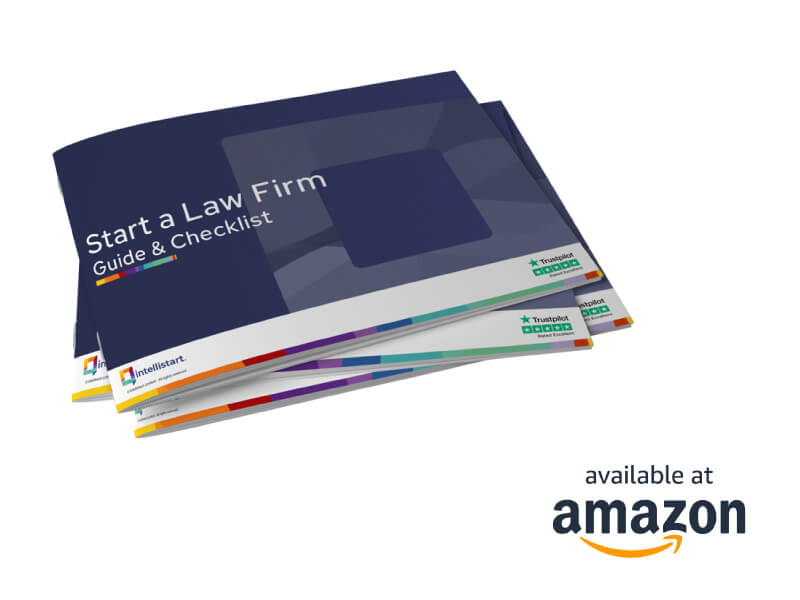
Our Start a Law Firm Guide now available at Amazon
Discuss your plans with our team
If you are considering launching a corporate or commercial law firm in England and Wales, we can help you explore the support you may need.
Arrange a free initial 30-minute discussion with our startup law firm specialist to talk through your plans, intended services and likely next steps.
Learn more about our Start a Law Firm serviceFAQs
Start by defining your services and target clients, researching the market, preparing a business plan and financial forecast, and deciding on an appropriate business structure.
You will also need to establish which regulatory authorisations and insurance requirements apply, arrange your business infrastructure and plan how you will attract clients.
The specific requirements depend on the services you intend to provide and the jurisdiction in which you will operate.
It depends on the business structure and the services you intend to provide.
Businesses providing reserved legal activities to the public will generally need appropriate authorisation unless an exemption applies.
Other activities may be subject to different rules or regulators.
Check the SRA’s current guidance and obtain advice relevant to your proposed practice before commencing work.
There is no single cost that applies to every new corporate law firm.
Your budget may need to cover insurance, regulatory and compliance support, business administration, IT, legal software, website development, marketing and working capital.
The amount required will depend on your structure, services, staffing, premises and operating model.
Preparing a detailed cash flow forecast can help you estimate your requirements.
If you need assistance, reach out to our team to learn how we can help.
The timescale depends on the proposed business structure, the regulatory process, insurance arrangements and how quickly the necessary information and supporting documents can be prepared.
The SRA states that it aims to decide new firm authorisation applications within 90 days where possible, but decisions can take longer.
Other setup tasks may also affect your launch date, so plan ahead. You can discuss this in more detail with our expert who can assist you with making the application to the SRA.
Your working arrangements will depend on the regulatory requirements applicable to your firm, your business model and the needs of your clients.
A remote or hybrid model may reduce some premises costs, but you will still need suitable systems for secure communication, document handling, confidentiality and business continuity.
Check the regulatory requirements before deciding on your setup.
Potential approaches include developing professional referral relationships, creating a clear and useful website, investing in SEO, running targeted Google Ads and publishing relevant content.
The best approach will depend on your services, target clients, budget and competition.
Track enquiries and new instructions so you can assess which activities are contributing to the firm’s growth.
Yes. Intellistart provides a Start a Law Firm service that can help you access specialist regulatory and insurance support alongside practical business setup and marketing services.
The support can be tailored to the tasks you need help with.
Regulatory advice and insurance are provided through specialist partners where appropriate.
Important note: This article provides general information for planning a new practice in England and Wales. It is not legal, regulatory, insurance or tax advice. Requirements depend on your circumstances and may change; consult the relevant regulator and suitably qualified advisers before making decisions.
